Getting GST Back on an Unpaid Invoice: How Bad Debt Adjustments Work
Client never paid? If you report GST on an accruals basis, you may be able to claim the GST back as a bad debt adjustment. Here's how it works.
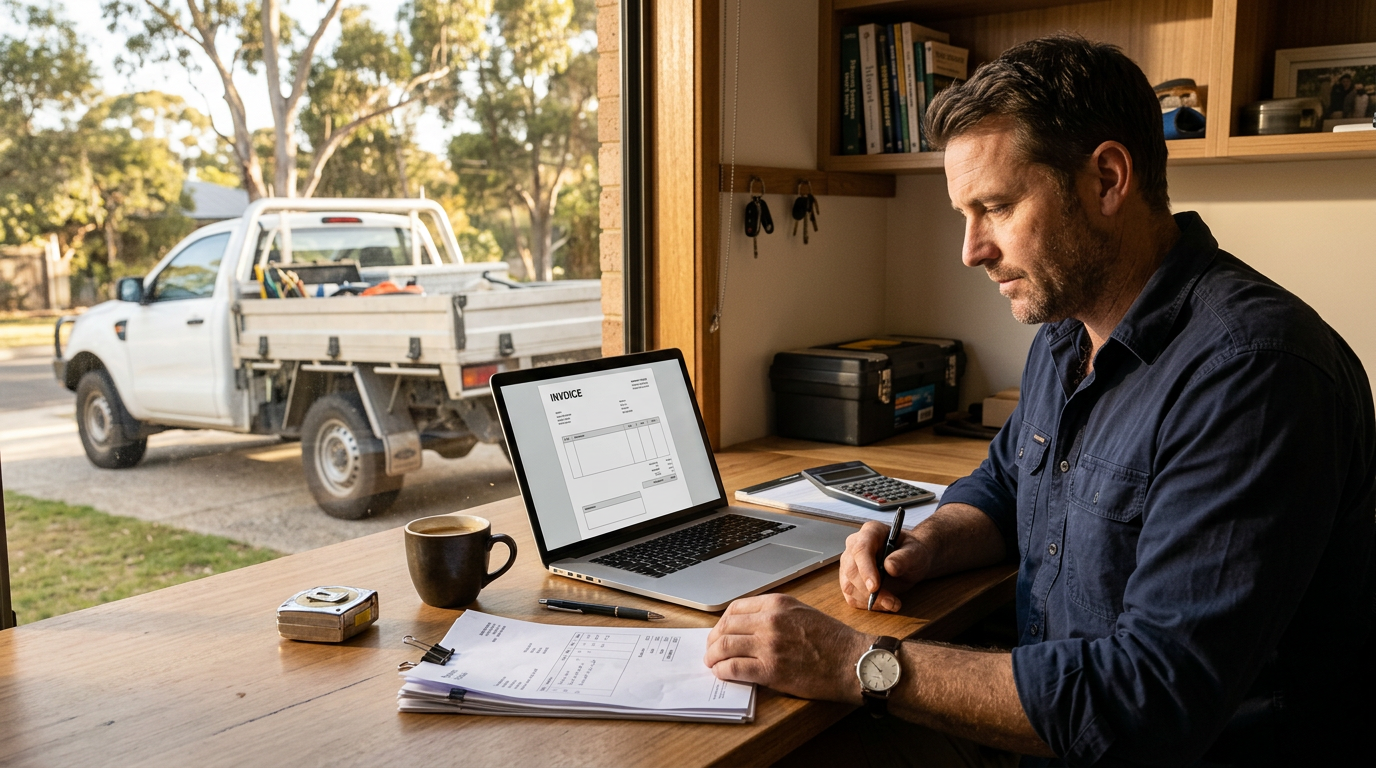
If you invoiced a client, reported the GST on your BAS, and the client never paid, you may be able to get that GST back. But only if you account for GST on an accruals (non-cash) basis, and only once the debt is genuinely bad: either you've written it off as bad, or it has been overdue for 12 months or more. If you account for GST on a cash basis, you generally can't claim anything, because you never reported GST on money you didn't receive in the first place.
The recovery isn't automatic. You claim it as a decreasing adjustment on your BAS, you need records showing you made a real effort to get paid, and if the client later pays up, you have to hand the GST back. This article walks through how it works, with an example, and where people trip up. It's general information, not personal tax advice. If your situation is unusual, check with the ATO or a registered tax agent or BAS agent.
TL;DR
- Accruals-basis GST reporters can claim a decreasing adjustment for GST on a bad debt. Cash-basis reporters generally can't, because they never paid GST on the unpaid amount.
- The debt must be written off as bad, or be overdue for 12 months or more, and you must have already paid the GST on the sale.
- "Late" isn't "bad". The ATO expects you to take reasonable recovery steps and document your decision.
- You can't treat a debt as bad if you've forgiven it or set it off against something else.
- If the client pays later (in full or part), you add the GST back in the period you receive it.
- Bad debts don't need an adjustment note (credit note). That's a different process for price changes.
First: which GST accounting method are you on?
Everything turns on this. For GST, you either account on a cash basis (you report GST when you receive payment and claim credits when you pay) or on an accruals basis (you report GST when you issue the invoice, or when you're paid, whichever comes first, and claim credits when you get a tax invoice or pay, whichever is first).
Many small businesses can choose either method. Per the ATO, businesses with an aggregated turnover of less than $10 million, or who use cash accounting for income tax, can use either method. Check your own setup before relying on anything below. If you're not sure which one you're on, look at how your BAS has been prepared, or ask your bookkeeper or tax agent. For a plain-English comparison of the two, see our resources on cash vs accrual accounting at ozinvoice.com.au/resources.
Here's what it means for bad debts:
| Cash basis | Accruals basis | |
|---|---|---|
| When GST is reported | When you're paid | When you invoice (or are paid, if earlier) |
| GST paid on an unpaid invoice? | No | Yes |
| Bad debt GST adjustment available? | Generally no | Yes, if the conditions are met |
The cash-basis result makes sense once you think it through. The ATO's bad debts guidance explains that a taxpayer on a cash receipts basis isn't entitled to a bad debt deduction for income tax, because the unpaid amount was never brought to account as income. The same logic applies to GST: the bad debt adjustment provisions do not apply to entities accounting for GST on a cash basis (GSTR 2000/2). You haven't lost GST you already paid, so there's nothing to get back.
That's cold comfort when you're out of pocket for the work itself, but it's one of the quiet advantages of cash accounting: you only ever owe GST on money that actually landed in your account.
The test for a GST bad debt adjustment (accruals basis)
Under the ATO's ruling GSTR 2000/2, you can claim a decreasing adjustment for a bad debt if all of the following apply:
- You made a taxable sale (a sale with GST in it).
- You paid the GST to the ATO on that sale, meaning you've reported it on a BAS.
- You have not received the payment (or not all of it).
- You've written the debt off as bad, or it has been overdue for 12 months or more.
Miss any one of these and the adjustment isn't available. GST-free and input-taxed sales don't qualify, since there's no GST to recover.
When do you claim it?
You attribute the decreasing adjustment to the tax period in which you write off the debt, or in which you become aware the debt has been overdue for 12 months or more. In practice, that means you claim it on the BAS for the period when you made the write-off decision (and recorded it in your books), not the period of the original sale.
"Bad" doesn't mean "late"
This is where many people get ahead of themselves. A client who is 30, 60 or even 90 days past due is a collections problem, not automatically a bad debt.
The ATO's position is that a supplier should take appropriate steps to recover the debt instead of simply writing it off as bad. Its own example: if you have a 90-day credit period and the debt is still outstanding at the end of that period, the debt won't, in the absence of other factors, be accepted as bad.
That said, the 12-month rule gives you a clear fallback. If a debt has been overdue for 12 months or more, you can claim the adjustment even if you haven't formally written it off. And a good-faith commercial decision that recovery is unlikely can still be accepted earlier, as long as you can show your reasoning.
What "reasonable steps" look like for a small business
You don't need to take every client to court. But you should be able to show a trail, such as:
- Dated reminders and follow-up emails or calls
- A formal letter of demand
- Evidence the client has gone insolvent, been deregistered, or can't be found
- A comparison of the debt against likely legal or collection costs (a $400 debt probably doesn't justify a $2,000 legal bill, and that's a legitimate commercial judgement)
- A written note in your records of when and why you decided to write it off
If you're still at the chasing stage, our guides at ozinvoice.com.au/resources on what to do when an invoice goes unpaid and on charging interest on overdue invoices are the place to start. Good records from that process are exactly what you'll want if the ATO ever asks about the write-off.
What kills a bad debt claim: forgiving or setting off
You cannot write off a debt as bad if you've forgiven it or set it off against other liabilities.
This catches people out in two common ways:
- Settling for less. A client owes you $2,200 and offers $1,000 to make it go away. If you agree and release them from the rest, you've forgiven the balance. That portion is no longer a bad debt for GST purposes. If you're considering a discounted settlement, get advice on how it affects your GST first.
- Swapping debts. If you owe the client money (say, for materials they supplied) and you net it off against what they owe you, that's a set-off, not a bad debt.
If a client's debt is truly hopeless, it's usually cleaner to write it off as bad rather than negotiate a partial release, but the right answer depends on the facts. This is a good moment to ask your tax agent.
Worked example
Sam is a sole-trader electrician who reports GST on an accruals basis. In March, Sam invoices a commercial client $5,500 ($5,000 plus $500 GST) and reports the $500 GST on the March quarter BAS.
The client stalls, then stops answering. Sam sends reminders, a formal letter of demand, and eventually discovers the client's company has entered liquidation with no funds for unsecured creditors. In the following quarter, Sam writes the debt off as bad in the books and keeps notes on each step taken.
- GST impact: Sam makes a decreasing adjustment of $500 on the BAS for the period in which the write-off happens. This reduces the GST Sam owes (or increases a refund).
- What Sam doesn't get back: the $5,000 for the work itself. The GST adjustment recovers only the tax component.
- Income tax: separately, the $5,000 bad debt may be deductible for income tax, because Sam included it as income when invoiced. That's an income tax question with its own rules, covered in the ATO's bad debts guidance. Confirm the treatment with your tax agent.
Now suppose a liquidator later pays Sam a dividend covering part of the debt. Sam has to reverse part of the adjustment, as explained below.
If the client pays later, you add the GST back
Getting the GST back isn't the end of the story. If you recover all or part of a debt that you previously claimed a decreasing adjustment for, you attribute the corresponding increasing adjustment to the tax period in which the debt is recovered.
In plain terms: if the client pays $2,750 of Sam's $5,500 debt a year later, one-tenth of that payment is GST. Sam reports a $250 increasing adjustment on the BAS for the period in which the money is received.
Keep a simple record of every bad debt you've written off, including the GST amount, so you'll spot a late payment for what it is and report it correctly. A short spreadsheet or a note in your invoicing tool is enough.
How to report the adjustment
Bad debt adjustments are made on your BAS using the GST adjustment labels. The ATO's pages on how to make adjustments and types of adjustments show where each type goes. If you use accounting software or a BAS agent, tell them clearly that it's a bad debt write-off so it's coded correctly.
If you realise you've missed a bad debt adjustment in an earlier period, that's a correction rather than a fresh adjustment, and there are time limits. See the ATO's pages on GST errors and time limits on GST credits and refunds, or ask your agent.
Don't confuse a bad debt with a credit note
Here's a common mix-up. Many people assume they need to issue a credit note to the client to "cancel" an unpaid invoice and claim the GST. For a bad debt, you don't.
According to the ATO's ruling, the adjustment note provisions of the GST Act do not apply to bad debts. Writing off a bad debt, or a debt becoming overdue for 12 months or more, isn't an adjustment event.
Credit notes belong to a different situation: where the price you charged actually changes, such as a billing error, a returned item, a discount you've agreed, or a cancelled job. In that case, GSTR 2000/1 on adjustment notes applies, and there are rules about holding an adjustment note before you can claim a decreasing adjustment above a set threshold. The figure quoted in that older ruling may have changed, so check the current amount on the ATO's adjustment pages before relying on it.
The quick test: did the price change, or did the client simply not pay? Price change means credit note. No payment means bad debt (or keep chasing).
Practical ways to avoid getting here
You can't eliminate non-payment, but you can shrink the risk and make any future write-off easier to defend.
- Put terms on every invoice. Due date, payment methods, and late-payment terms. Clear invoices get paid faster.
- Take deposits on bigger jobs. Tradies especially can ask for a deposit or progress payments for materials-heavy work. See ozinvoice.com.au/for/tradies.
- Make paying easy. Bank transfer details, or a pay-by-link option such as bank-to-bank payments, remove the "I couldn't find how to pay" excuse.
- Follow up on a schedule. A reminder a few days before the due date, on the due date, and a week after. Freelancers working with agencies and startups can find more at ozinvoice.com.au/for/freelancers.
- Keep a paper trail. Dated copies of invoices, reminders, and replies. That's your evidence if you need to justify a write-off.
- Check the client before large jobs. A quick ABN lookup and, for big contracts, a credit check can flag problems early.
Invoicing tools can help with the tracking side. See what OzInvoice can do for overdue reminders and invoice status, though the write-off decision and BAS reporting remain yours (or your agent's) to make.
Questions Australian businesses ask
Can I claim back the GST on an invoice my client never paid?
Yes, if you account for GST on an accruals basis and the debt is genuinely bad. You can claim a decreasing adjustment on your BAS if you made a taxable sale, paid the GST to the ATO, haven't been paid, and have either written the debt off as bad or it has been overdue for 12 months or more. If you account for GST on a cash basis, you generally can't, because you haven't reported GST on money you never received.
I'm on cash accounting. Do I lose the GST when a client doesn't pay?
No. On a cash basis you only report GST when you receive payment, so you haven't paid any GST on the unpaid invoice. The bad debt adjustment rules don't apply to cash-basis reporters because there is nothing to recover. You still lose the income for the work, but not any GST you've handed to the ATO.
How long does an invoice have to be overdue before it's a bad debt for GST?
There's no fixed minimum for writing a debt off as bad. It depends on whether you've taken reasonable steps and made a documented, good-faith decision that recovery is unlikely. However, a debt that has been overdue for 12 months or more qualifies for the adjustment regardless. The ATO has said that a debt still unpaid at the end of a 90-day credit period won't, on its own, be accepted as bad.
Do I need to issue a credit note to claim GST on a bad debt?
No. The adjustment note rules in the GST Act don't apply to bad debts, and writing off a bad debt isn't an adjustment event. Credit notes are for when the price actually changes, such as a billing error or an agreed discount. For a bad debt, you record the write-off in your books and make the decreasing adjustment on your BAS.
What happens if my client pays after I've claimed the GST back?
You need to reverse the adjustment. If you recover all or part of a debt you previously claimed a decreasing adjustment for, you report a corresponding increasing adjustment on the BAS for the period in which you receive the money. For a part payment, only the GST portion of what you received is added back.
Can I settle for a lower amount and still claim the GST as a bad debt?
Usually not for the amount you release. If you forgive part of a debt or set it off against something you owe the client, you can't write that part off as a bad debt. Discounting to settle may change your GST outcome, so get advice from your tax agent before agreeing to a reduced settlement.
Is a bad debt deductible for income tax too?
It may be, if you've included the amount in your assessable income (for example, you're on accruals for income tax) and the debt is genuinely written off as bad. That's a separate test from the GST adjustment. See the ATO's bad debts guidance and check with a tax professional.
When to get professional help
Most straightforward bad debts are manageable on your own. Talk to a registered tax agent or BAS agent if the debt is large, you're considering a settlement, the client has gone insolvent, you're unsure which accounting method you're on, or you've missed an adjustment in earlier periods. The ATO's rulings are detailed, and the right answer often turns on small facts. For more guides on getting paid and staying on top of your BAS, browse ozinvoice.com.au/resources.
Sources
- GSTR 2000/2 – Goods and services tax: bad debts (ATO)
- Deductions for unrecoverable income (bad debts) (ATO)
- Choosing an accounting method for GST (ATO)
- How to make adjustments (ATO)
- Types of adjustments (ATO)
- GSTR 2000/1 – Goods and Services Tax: adjustment notes (ATO)
- What is a GST error (ATO)
- Time limit on GST credits (ATO)
This article is general information only and isn't tax or legal advice. Rules and thresholds change, so confirm your situation with the ATO or a registered tax professional.